
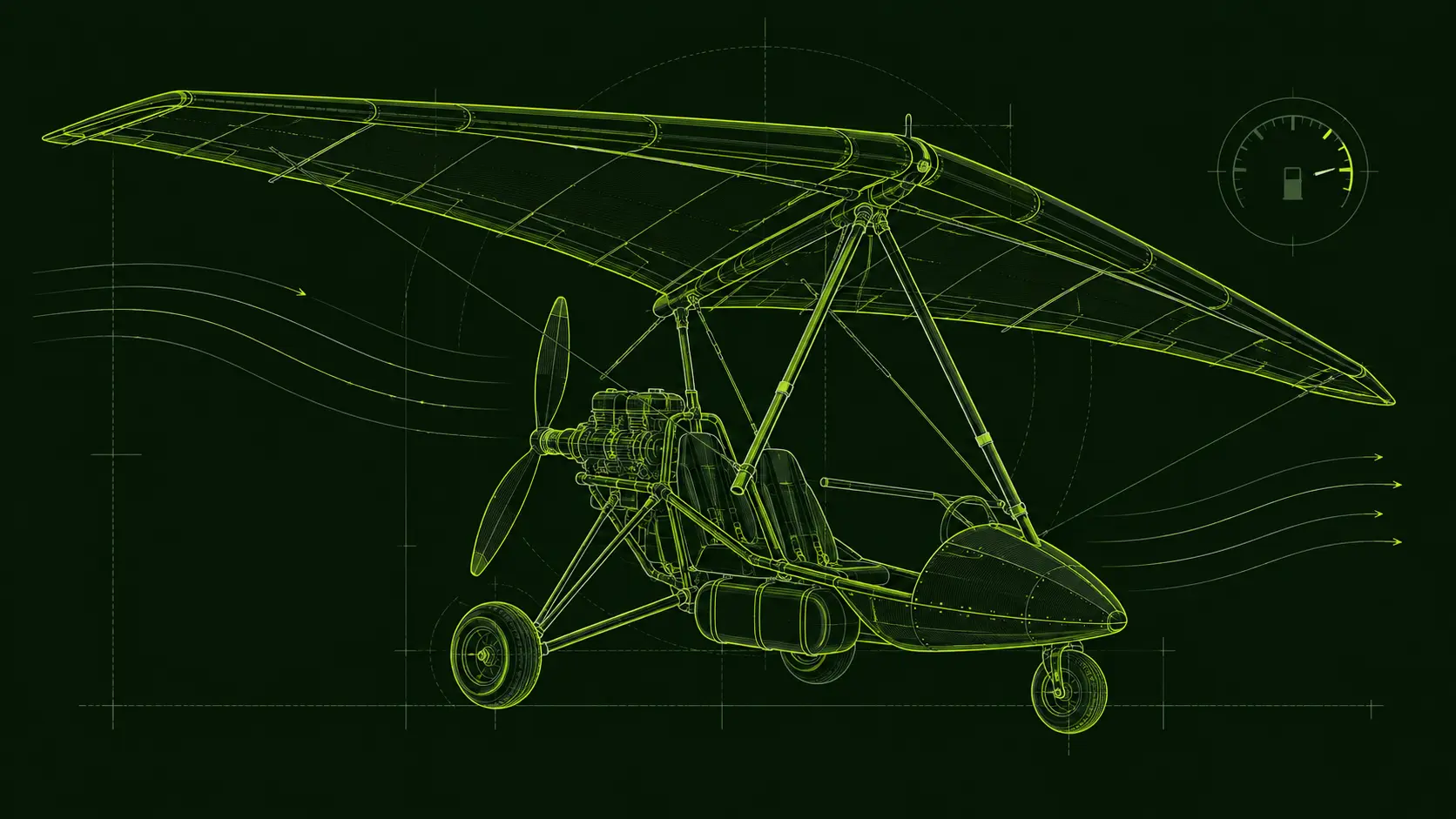
OGDiddo fuel telemetry puts one full Motor Glider canister at about 11.1 minutes of airborne time — with the range, method and limits in one compact read.
Across 155 Motor Glider matches with usable fuel telemetry, OGDiddo recorded 20 hours 38 minutes of airborne time and 11,154.5% of a full tank consumed. That works out to approximately 11.1 minutes in the air per one full-canister equivalent.
This is a measured average, not a theoretical maximum: the sample includes climbs, turns, combat positioning, refuelling and 21 in-flight fuel-outs. In other words, it describes real recorded flights rather than a perfect straight-line test.
The number
| Metric | OGDiddo telemetry |
|---|---|
| Matches with fuel telemetry | 155 |
| Recorded airborne time | 20h 38m |
| Fuel consumed | 11,154.5% — about 111.5 full tanks |
| Average time per full canister | ≈11.1 minutes |
| Estimated distance per full tank | ≈11.1 km |
| Fuel-outs while airborne | 21 |
How it is calculated
Average time per canister = total flight time ÷ (total fuel used ÷ 100). Using the database totals: 1,238 minutes ÷ 111.545 tank-equivalents = 11.1 minutes.
The database also records 89.9% of a tank used per 10 kilometres and an estimated full-tank range of 11.1 kilometres. That range is a practical average, not a promise: altitude changes, manoeuvres and time spent searching for targets all change the burn rate.
What to remember
- Plan around roughly 11 minutes per full canister in a real flight.
- Refuel before the tank becomes critical: the sample contains 186 refuel events.
- Keep reserve fuel for repositioning and the final approach — a combat flight is rarely a straight line.